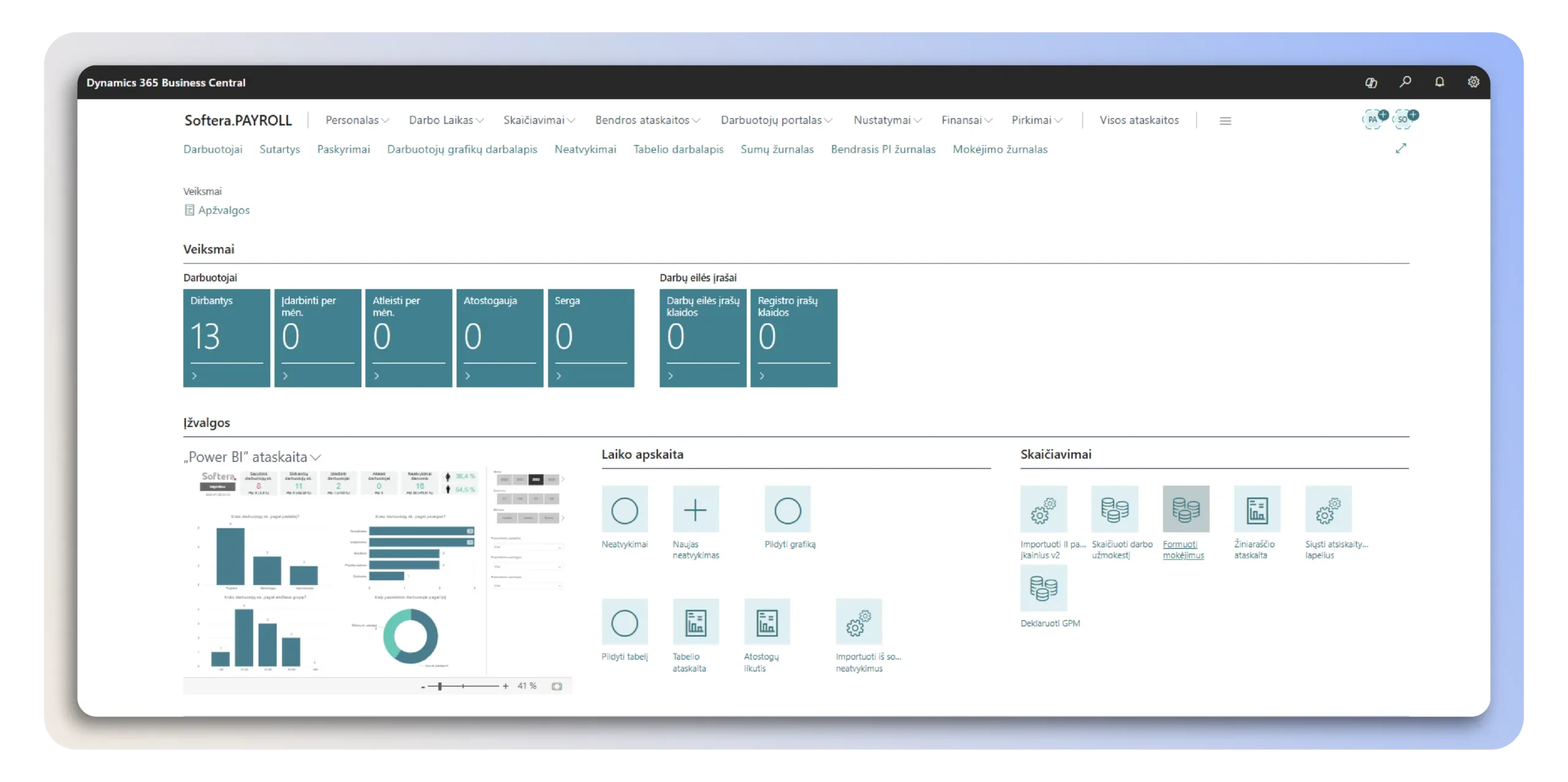


Trade Management
with Dynamics 365 Business Central
In modern trade, it’s not just about selling, but also ensuring that the entire process – from customer inquiry to payment – runs smoothly. Microsoft Dynamics 365 Business Central integrates trade management into a single system: sales, customer management, purchasing, order fulfillment, inventory, and finance.
Learn more

The difference you’ll notice
immediately

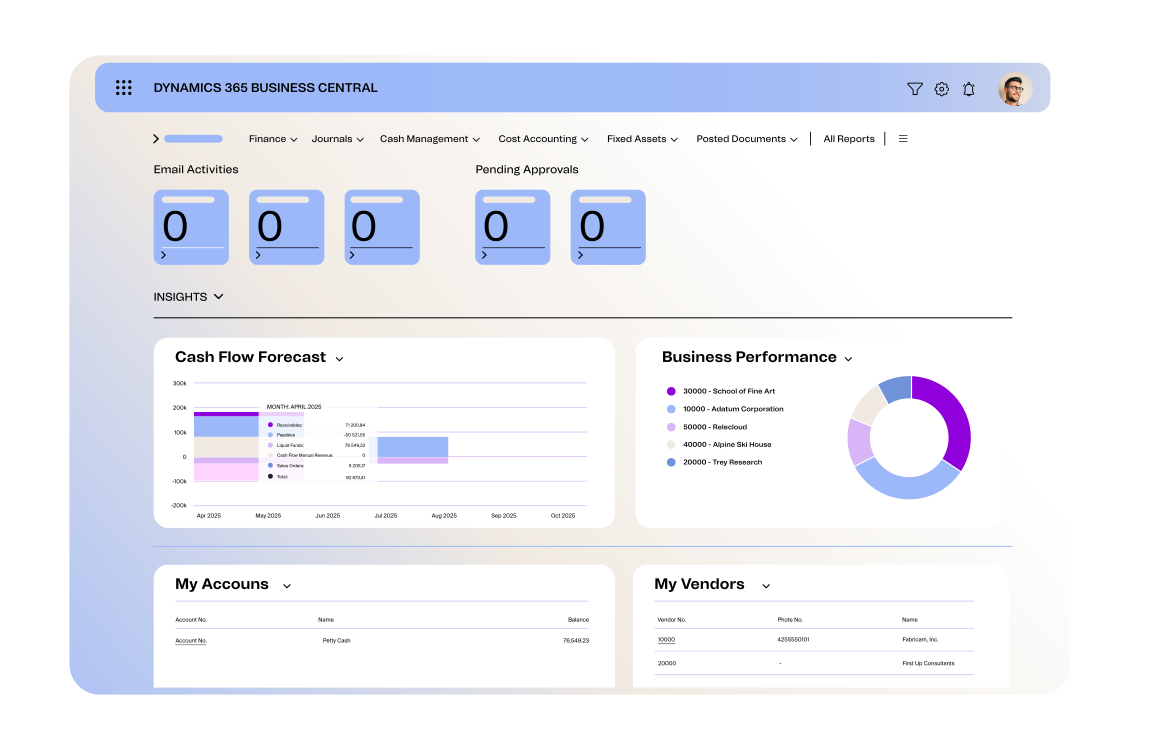
Business Central helps digitize the entire trade cycle in one ERP system – from quotation and pricing to supply, delivery, invoicing, and profitability analysis. When sales, purchasing, and order fulfillment operate within a single system, businesses can grow consistently through clearly managed processes.
Without a Trade Management System
-

Demand outstrips actual capabilities
Sales commit to customers without a complete view of inventory, supply, or fulfillment deadlines.
-
Margin ‘erodes’ in the process
Pricing, discounts, purchase costs, and additional expenses are managed fragmentarily, so profitability only becomes clear after the fact.
-
Fulfillment stalls between departments
Information between sales, purchasing, warehouse, and finance travels manually, and supply often reacts only after a problem has occurred.
-
Managers don’t see where the process loses value
When data is scattered, it’s difficult to understand where the process is faltering: in pricing, supply, fulfillment, or delivery.
With Dynamics 365 Business Central
-

One Managed Process
Customer data, quotes, orders, purchases, deliveries, returns, and invoices are managed in a single ERP system.
-
Decisions based on real data
The sales team sees inventory, delivery times, and agreed prices before committing to a customer.
-
Departments work together
Order fulfillment relies on real-time product availability, clear statuses, and consistent information flow.
-
Growth without chaos
As the number of orders, customers, and sales channels increases, processes remain controlled because all trade logic is managed within a common system.
The Value of Trade Digitization for Business
Seamless process from quote to payment

Business Central allows managing the entire trade cycle – from contact, quote, and order to delivery, invoice, and payment. When data and processes are connected, friction between teams decreases, and order progression becomes smoother and easier to manage.
More accurate planning and reliable execution

When sales, purchasing, and inventory information is clearly linked, companies can plan demand more accurately, promise more realistic delivery times to customers, and fulfill commitments more consistently. This helps reduce disruptions, shortages, and urgency.
Pricing and profitability control
Business Central helps centralize the management of prices, discounts, and commercial terms, ensuring that decisions are based not only on turnover but also on profitability. This visibility allows for better control of financial results throughout the trade process.
Visibility and analytics for decisions
The system provides not only operational data but also KPIs, reports, and analysis needed for faster decision-making. This allows for earlier detection of deviations, better risk management, and more accurate assessment of trade process efficiency.
Unified platform for growing business

Business Central is tailored for small and medium-sized businesses that need a single, easily adaptable solution for finance, sales, and operations. As the business grows, the system can expand with evolving needs, maintaining integrated processes and a single data foundation.
The best place
to start is a
conversation
A short discussion helps clarify what you actually need. No obligations – just a practical consultation focused on what matters most for your business today.

Quick check – is it worth digitizing trade processes?
Check what applies to your company. If at least one statement is true – Dynamics 365 Business Central may be the solution for you.

Dynamics 365 Business Central
functionality for trade management
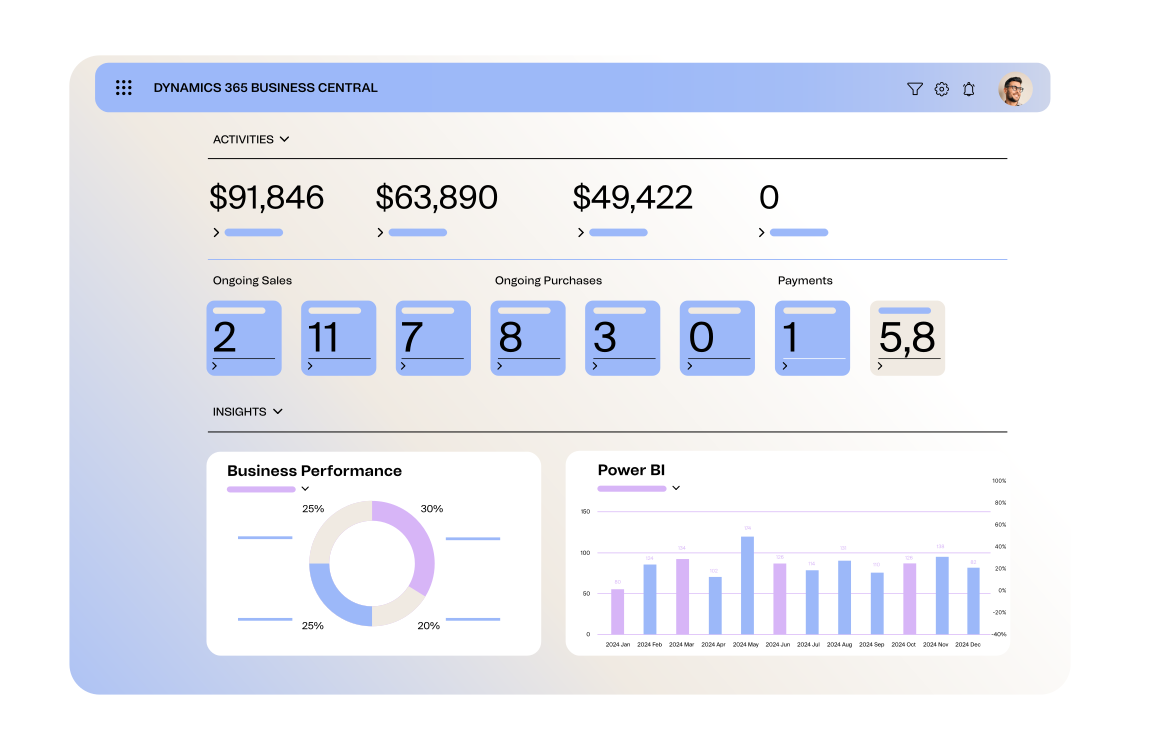
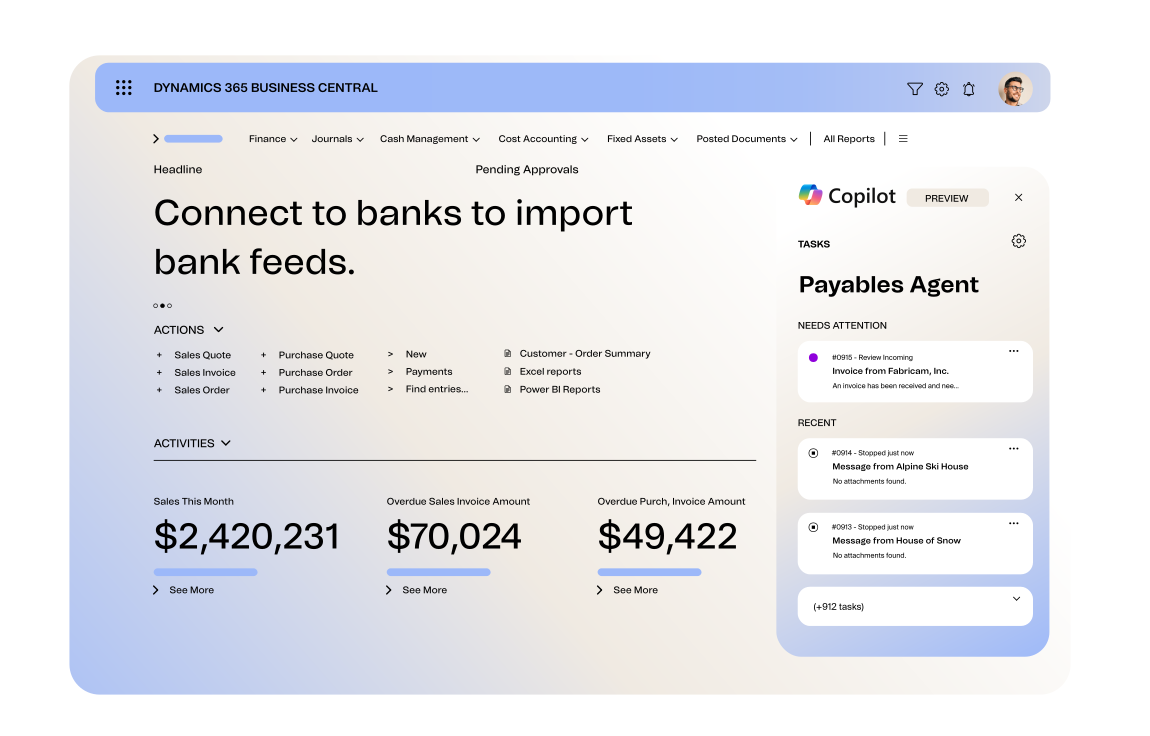
Business Central functionality helps manage the entire trade flow – from sales opportunities and pricing to order fulfillment, purchasing, and financial results.
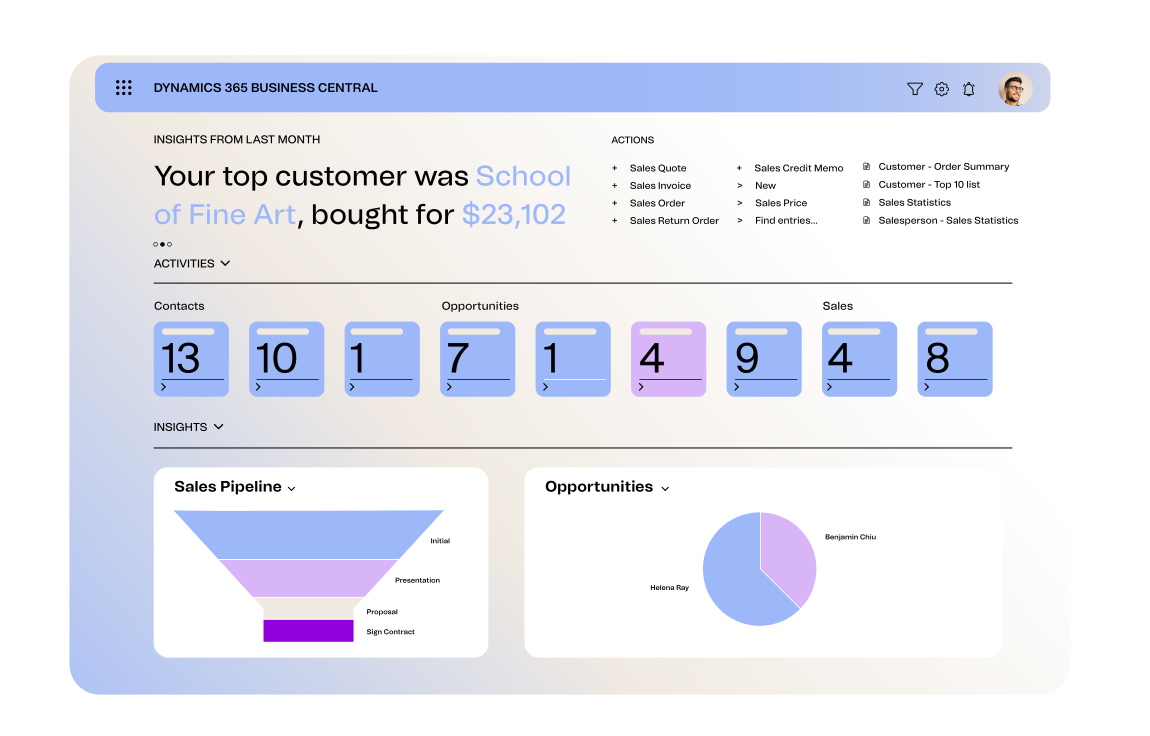
Customers, Sales, and Commercial Terms
- Customer and contact information in one place
All important information about customers, contacts, communication history, and agreements is stored in one system. This helps ensure consistent communication and better customer understanding. - Sales opportunity management
The sales process is broken down into clear stages, making it easier to track progress, forecast revenue, and manage priorities. - Marketing campaign management
Marketing activities are planned and evaluated using the same customer and sales data, making it easier to see their impact on real business results. - Quote and sales order management
Quotes and orders are generated within a single ERP system, directly linking them to customers, pricing, inventory, and finance. - Price and discount management
The system allows applying price lists, promotional prices, invoice discounts, and individual commercial agreements, maintaining control throughout the trade process. - Alternative delivery and invoice addresses
Flexible address management helps serve customers with different delivery points, departments, or projects more accurately.
Planning, Availability, and Order Fulfillment
- Demand forecasting and replenishment planning
The system helps forecast demand by items, variants, and locations, plan replenishment, and make more accurate purchasing and inventory decisions. - Order Promising
Business Central allows for a more accurate assessment of when an item can be delivered to a customer, based on real-time stock, planned replenishment, and supply lead times. - Reservation by priority
The system helps reserve inventory and future replenishment for the most critical needs when the same items are required for multiple orders or processes. - Order fulfillment
From confirmed order to customer delivery, all stages are managed in one system, providing clear visibility of statuses, deadlines, and responsibilities. - Sales invoicing
Invoices are issued based on actual fulfillment, ensuring accurate revenue recognition and reducing manual corrections. - Returns and credit memo management
Returns, exchanges, and credits become a standard part of the process, rather than separate disruption management.
Purchasing and Supply Continuity
- Purchase order management
Purchases are managed centrally – from demand to order, receipt, and financial recording. - Purchase invoice registration
Purchase invoices are linked to orders and receipts, making settlements with suppliers more accurate and transparent. - Alternative suppliers and supplier catalogs
The system allows for quicker reaction to changes in the supply chain, providing alternatives and enabling more informed purchasing decisions. - Payment terms and commitment control
Purchasing data is directly linked to finance, providing clear visibility of future commitments and expenditure dynamics.
Financial Accuracy and Profitability Control
- Sales and purchasing integration with finance
Every commercial action has a clear financial reflection – from invoices to commitments and revenues. - Profitability analysis by customers, products, or transactions
The system allows evaluating not only turnover but also real margin and results across different dimensions. - One data model for decisions
Managers can analyze trade processes based on the same data across the organization – without separate Excel files and differing interpretations.
E-commerce, Automation, and Sales Channel Integration
- E-commerce integration
Business Central can be integrated with e-commerce channels to ensure consistent flow of product, price, inventory, customer, and order data between the sales system and ERP. - Order and return synchronization
The system helps centrally manage not only orders but also returns, corrections, and invoices when sales occur through multiple channels. - Approval workflows
The system allows applying approval logic in purchasing, sales, pricing, or master data change processes. - Process automation
Repetitive tasks can be automated to ensure important processes run faster, more consistently, and with less manual intervention.