

Production Management with
Dynamics 365 Business Central
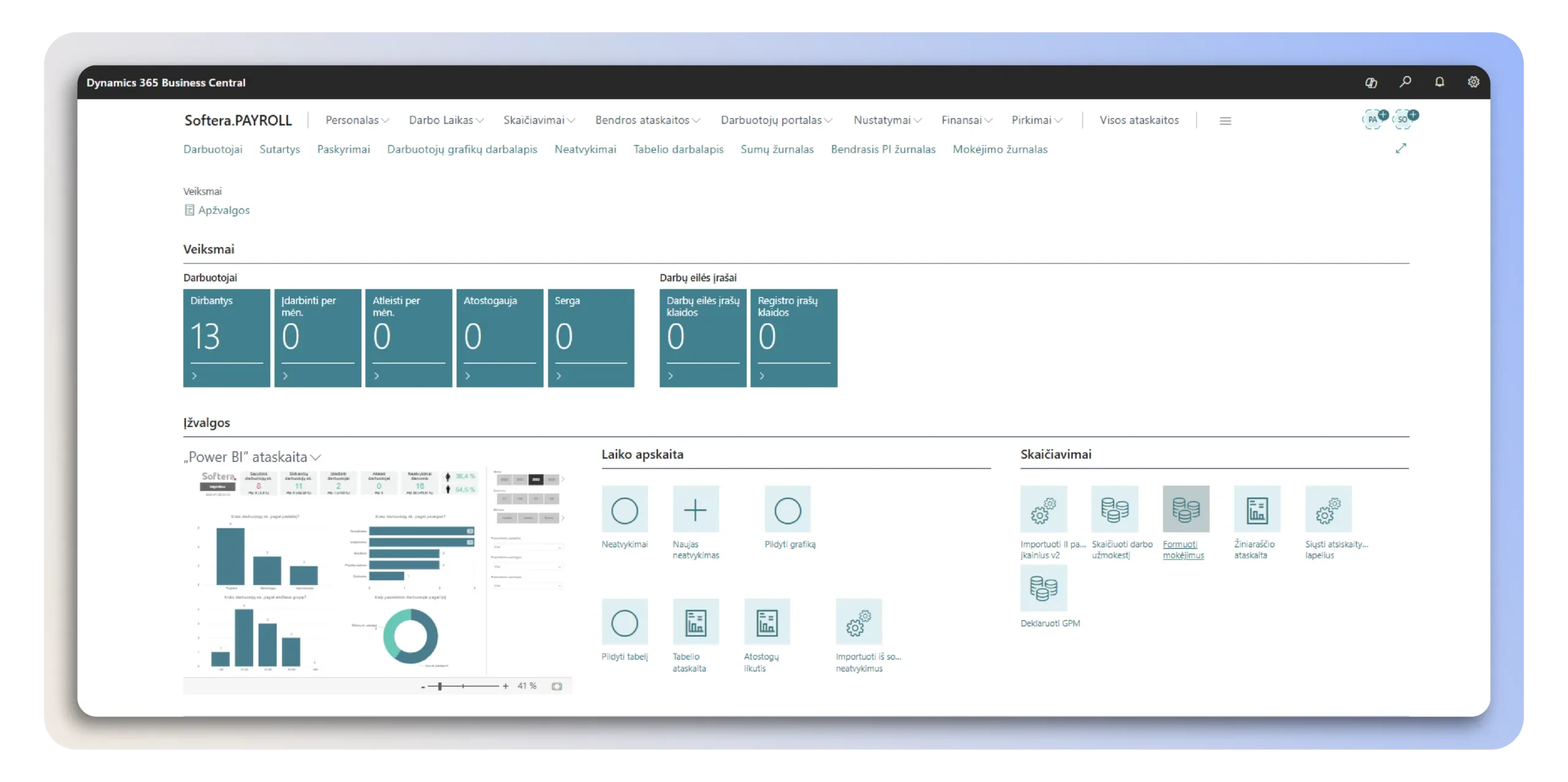
Modern manufacturing requires not only capacity but also a clear plan, accurate costs, and real-time control. Microsoft Dynamics 365 Business Central production management is not a separate module – it is an integral part of a unified system that connects sales, purchasing, warehouse, production, and finance into a single data model.
Learn more

The difference you’ll notice
immediately

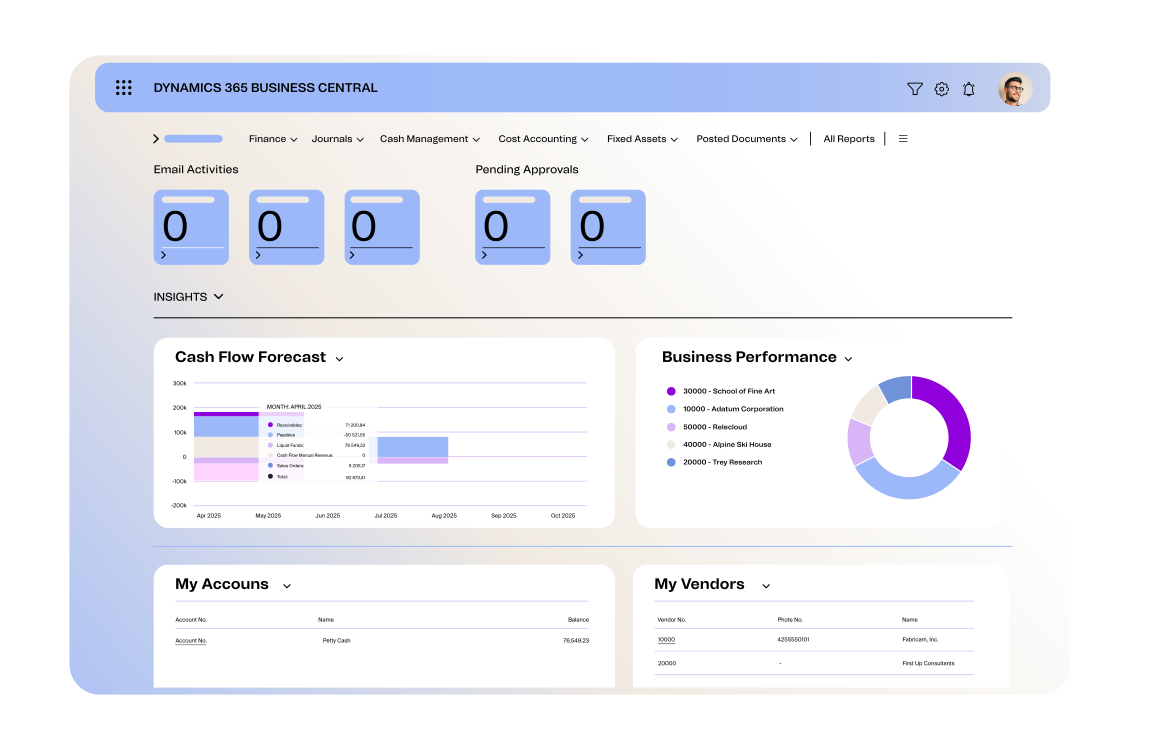
Business Central helps digitize production processes – from raw material requirements planning to production order execution and final product cost accounting.
Without a production management system
-

Planning is based on assumptions
Production plans are often prepared manually, without considering actual capacity, materials, or order priorities.
-
True cost becomes clear too late
The actual product cost becomes clear only after production, when profitability and decisions must be evaluated retrospectively.
-
Disruptions halt execution
Unplanned stoppages and delays due to material shortages, rescheduling, or operational issues disrupt smooth execution.
-
Limited Visibility
There is no clear picture of what is causing delays: equipment, people, queues, rescheduling, or defects – so decisions become “guesswork.”
With Dynamics 365 Business Central
-

Planning is based on actual demand
Production is planned according to orders and forecasts, taking into account capacity and material availability (MRP).
-
Transparent cost structure
The impact of raw materials, labor, and overhead costs on product cost is clearly visible, making it easier to analyze the causes of cost fluctuations.
-
Smooth execution without interruptions
The system helps ensure timely material supply to production, reduce disruptions, and ensure more consistent execution of production orders.
-
Real-time Control
Production status, progress, deviations, and their impact on financial results are visible in real time, enabling proactive decision-making.
Business value of production digitization
Clear planning and production control
Dynamics 365 Business Central enables production planning based on actual orders, forecasts, and available capacity. The system helps create production plans according to deadlines and priorities, manage work center and shift loads, and identify production bottlenecks in advance.
Raw material, cost, and inventory control

The system helps control raw material consumption, labor time, scrap, and subcontracting operations, while automatically calculating material requirements and maintaining optimal inventory levels. This reduces disruptions, excess inventory, and tied-up capital.
Cost transparency and profitability
For manufacturing companies, it is essential to know precisely how much a manufactured product costs. Business Central ensures cost accounting that includes materials, labor, and overhead costs. The system enables comparison of planned and actual costs and analysis of profitability by product, order, or customer.
Real-time process transparency
Production in the Business Central system is not an isolated process – it operates within a shared ERP data model. Managers can see production progress, order status, and their impact on financial results at any time.
Unified and flexible production management platform

Business Central integrates all stages of the production process into one ERP system – from planning and capacity management to cost and financial control. The system supports different production models – from simple single-level assembly production to configurable multi-level product structures or engineer-to-order products with CAD system integration.
The best place
to start is a
conversation
A short discussion helps clarify what you actually need. No obligations – just a practical consultation focused on what matters most for your business today.

Quick check – is it worth digitizing production?
Check what applies to your company. If at least one statement is true – Dynamics 365 Business Central may be the solution for you.

Dynamics 365 Business Central
functionality for production digitization
Dynamics 365 Business Central integrates planning, execution, and finance into one system. The functionality covers the entire production cycle – from product structure definition to production order execution, cost analysis, and continuous control.
Product structure and product preparation
- Configure-to-order (CTO) production, engineer-to-order production with CAD integrations (ETO).
- Bills of Materials (BOM)
The system enables creation of detailed component and material lists for each product, ensuring that raw material requirements and production logic are clearly defined. - Version management
Product variations, technological changes, and their history can be managed, making it easier to work with different product versions or production at different locations. - Assembly management
Simplified assembly processes help companies engaged in assembly or simpler production models to start with lower complexity scenarios.
Planning and requirements calculation
DDMRP, dynamic inventory buffer management.
- MRP (Material Requirements Planning)
The system automatically calculates raw material requirements based on orders, forecasts, inventory availability, and planning parameters. - Capacity planning
Work center, equipment, and shift loads are managed to help avoid bottlenecks and overloading. - Deadline control
Planning is based on priorities and actual production deadlines, making it easier to align customer commitments with actual capabilities.
Production execution and operations
- Production order management
The system supports the entire production order cycle – from planned to finished product, enabling management of different order statuses and their progress. - Workflow tracking
Actual operations, time consumed, setup and execution duration, and equipment load can be recorded in real time. - Automatic component and capacity consumption
The system enables automatic registration of material and capacity consumption, reducing manual work and ensuring more accurate WIP and inventory information. - Subcontracting
External services and operations can be integrated into the overall production chain, maintaining both process and cost control.
Cost, quality, and traceability control
- Material consumption accounting
The system supports backflush and forward flush principles for automatic raw material posting and actual consumption control. - Scrap management
Scrap can be recorded at each operation and its impact on cost, inventory, and planning can be evaluated. - Traceability
Lot or serial number traceability across all production levels, so that when an error occurs, the root causes can be identified and preventive action can be taken.
Financial accuracy and analysis
- Actual cost accounting
The system accurately links material, labor, and indirect costs to a specific product or order. - Profitability analysis
Production results can be compared with plans, enabling evaluation of product, order, or customer profitability. - Variance evaluation
It is possible to analyze why actual results differ from the plan and use this for continuous process improvement. - Standard Cost Worksheet
The system provides a tool for setting standard production costs, periodically updating them, and analyzing variances in greater depth.